One More Spin Won't Hurt: The Psychology Behind Why Aussies Can't Quit the App

One More Spin Won't Quit: The Psychology Behind Why Aussies Can't Quit the App
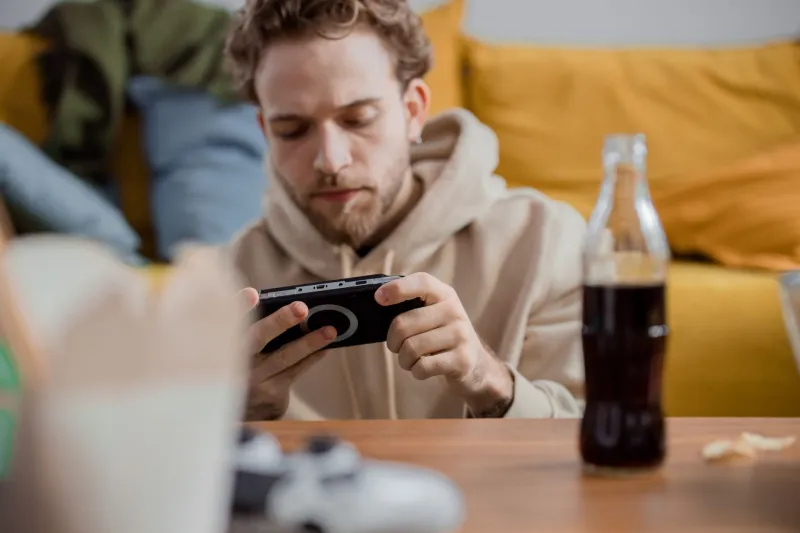
It starts so innocently. You're on the couch, footy's on in the background, and you think, right, just a quick session before dinner. Forty-five minutes later, the pasta's overcooked, your partner's giving you the look, and you're still tapping that spin button like it owes you something.
Sound familiar? Of course it does. The "just one more" phenomenon is basically a national pastime at this point — and it's not a character flaw. It's actually baked into the way our brains work, and the way casino apps are designed. Understanding both sides of that equation is genuinely useful, so let's get into it.
Your Brain Is Working Against You (In the Most Fascinating Way)
Here's the thing about the human brain: it absolutely loves patterns, and it especially loves almost completing them. There's a well-documented psychological quirk called the Zeigarnik Effect — basically, our minds fixate on unfinished tasks far more than completed ones. Every spin that doesn't land a win feels like an open loop. And your brain, bless it, really wants to close that loop.
Layered on top of that is variable reward scheduling — the same mechanism that makes social media feeds impossible to put down. When rewards are unpredictable, we keep engaging far longer than we would if the outcome were fixed. A pokie that paid out every tenth spin like clockwork would actually be less compelling than one that pays out randomly. The randomness is the hook.
This isn't a conspiracy — it's just neuroscience. But knowing about it gives you a bit of an edge.
The Auto-Spin Trap Nobody Talks About
Auto-spin is a genuinely handy feature. Set it, kick back, watch the reels do their thing. Except — and here's where it gets sneaky — removing the physical act of pressing the button also removes one of your most natural decision points.
Every time you manually hit spin, there's a micro-moment where you could stop. Auto-spin eliminates those moments entirely. You go from active participant to passive observer, and passive observers tend to stay in their seats a lot longer.
If you're someone who struggles to find a natural stopping point, try switching to manual spins for a session. It sounds counterintuitive, but that tiny bit of friction actually creates breathing room — little moments where your brain can check in and ask, am I still enjoying this, or am I just... here?
Push Notifications: The Tap on the Shoulder You Didn't Ask For
You've closed the app. You've put the phone down. You're practically a responsible adult. Then: ping. "Your bonus spins are waiting!" And suddenly the app is open again.
Push notifications are designed to re-engage you at the exact moment you've disengaged, and they're very good at their job. They create a sense of urgency — limited-time offers, expiring bonuses, mystery rewards — that short-circuits the rational part of your brain and goes straight for the impulsive bit.
The fix here is brutally simple: turn them off, or at least schedule them. Most phones let you set notification windows, so you're only seeing those pings during times you've already decided are fair game. That way, the app isn't deciding when you play — you are.
Spotting Your Natural Stopping Point (Before It Disappears)
Everyone has a natural stopping point. The trick is recognising it before you scroll past it.
For most players, the natural stopping point shows up in a few ways:
- The momentum drops. You're no longer excited by the spins — you're just watching them.
- You stop noticing the game. If you're thinking about something else entirely while the reels spin, you've probably already checked out mentally.
- You're playing to recover, not to enjoy. If the fun has been replaced by a vague sense of needing to "fix" the session, that's a big signal.
- You catch yourself calculating. "If I just get one more win, I'll be back to where I started" is a thought worth paying attention to.
None of these are emergencies. They're just signposts. And once you know what they look like for you personally, they're surprisingly easy to act on.
Practical Ways to Reclaim Your Exit
Look, we're not here to tell you online gaming isn't fun — it absolutely is, and that's the whole point of it. But fun has a natural lifespan in any given session, and the goal is to catch it before it curdles into something less enjoyable.
A few things that actually work:
Set a time limit before you open the app. Not a vague "I'll stop when I'm tired" — an actual time. Put it in your phone's clock. When the alarm goes off, that's your cue.
Use a balance checkpoint. Decide before you start what balance would feel like a natural stopping point — whether you're up, down, or back to neutral. Having a number in mind makes the decision easier than trying to calculate it mid-session.
Give yourself a proper wind-down spin. Some players find it helpful to mentally designate their last few spins as the "closing credits" of the session. It gives your brain the sense of completion it's craving, rather than leaving everything feeling unresolved.
Change your environment. If you're still playing because you're still on the couch, getting up — even just to grab a glass of water — can break the loop. Physical movement genuinely helps reset the mental pattern.
The Self-Awareness Advantage
Here's the thing: players who understand what's happening in their own heads tend to have more fun, not less. When you know your brain is going to try to keep you spinning, you can work with it rather than against it. You can enjoy the ride without losing track of the station.
The "just one more" feeling isn't something to be embarrassed about — it's a completely normal response to how these games are built. But it's also something you can get ahead of, and when you do, the whole experience gets better. You're playing because you want to, not because the app has quietly taken the wheel.
And honestly? That's a much better place to be spinning from.